-
 Understanding Power Failures in Ultrasonic Cleaning Machines
Ultrasonic cleaning machines are widely used in various industries due to their efficiency in removing contaminants from delicate and complex parts. However, power failures can occur, disrupting the cleaning process and potentially causing damage to the m
-
 What is the effect of a small household ultrasound cleaning machine on cleaning glasses? Is it worth buying?
Glasses are very common in our daily life. Short-sighted glasses can let short-sighted people see the world more clearly. Sunglasses can help fashionistas create unique styles. But wearing glasses for a long time will always become less clear than at the
-
 Ultrasonic Cleaning Machine for Thin Blades: How Precision Cavitation Cleans Without Deformation
Thin blades—turbine foils, compressor vanes, surgical cutting edges, semiconductor lead frames—share a common cleaning dilemma. Contaminants cling to surfaces that cannot tolerate brushing, scraping, or high-pressure spray. A blade thin enough to flex bet
-
 Sensor Metal Housing Cleaning: Ultrasonic vs. Spray—Where the Difference Actually Lives
A sensor housing comes off the machining line with cutting oil, metal fines, and oxidized particles packed into thread roots, blind-hole bottoms, and mating seams. It goes through a spray washer, comes out looking clean, and passes a visual check. Weeks l
-
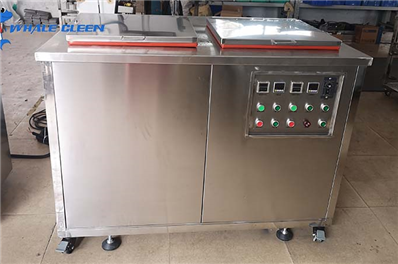 Ultrasonic Cleaning Machine for Batch Sensor Housings: How Whale cleen Prevents Scratches
Batch cleaning sensor housings is one of the most demanding tasks in precision manufacturing. These components often feature machined surfaces, threaded ports, blind holes, and tight tolerances. Contaminants such as cutting oil, metal fines, polishing res
-
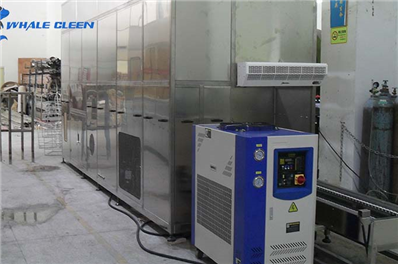 How to Remove Grinding Dust from Blind Holes and Gaps: Industrial Ultrasonic Cleaning Practical Guide
Grinding, deburring, and polishing operations leave fine dust that is easy to see on open surfaces and almost impossible to remove from blind holes and narrow gaps. Compressed air blows some dust out but pushes the rest deeper. Brushes cannot reach the bo
-
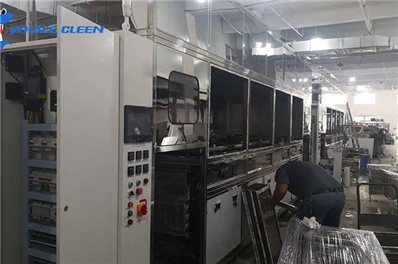 Ultrasonic Cleaning Machine: How to Remove Thick Oxide Scale Without Acid Pickling
Thick oxide scale is one of the most stubborn contaminants in industrial parts cleaning. It forms on steel, castings, forgings, and welded components after heat treatment, hot rolling, or high-temperature processing. In many plants, the default solution i
-
 Same Ultrasonic Cleaning, Why Are Some Aerospace Fastener Yield Rates So Much Higher?
In aerospace manufacturing, few quality metrics are as unforgiving as fastener cleanliness. A single micro-fastener — a titanium alloy bolt, a high-strength steel screw, a threaded insert — can carry cutting fluids, lapping compounds, or microscopic metal
-
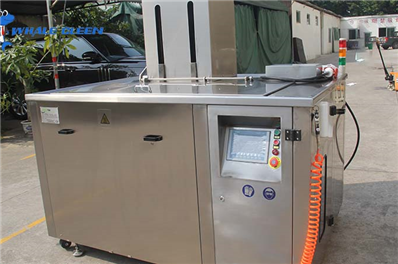 How Ultrasonic Cleaning Reaches the Thread Roots of Micro-Fasteners for Deep Chip and Oil Removal
In precision manufacturing, few challenges are as persistent—or as costly—as cleaning micro-fasteners. Screws, bolts, and threaded inserts with diameters under M2 feature intricate geometries: narrow thread valleys, blind holes, and sharp internal corners
-
 Ultrasonic Cleaning Machine: Solving the Batch Cleanliness Inconsistency Crisis in Aerospace Fastener Manufacturing
In aerospace manufacturing, a single contaminated fastener can compromise an entire assembly. Threaded surfaces trap machining oils, metal chips, and microscopic particulates that, if not completely removed, directly affect torque values, joint integrity,
-
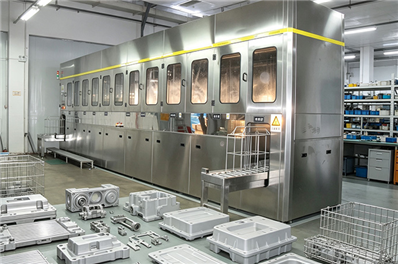 How Many Types of Electroplating Hardware Blanks Can One Ultrasonic Cleaning Machine Handle?
Walk into any hardware electroplating facility, and you will see a staggering variety of workpieces moving through the production line. Stamped brackets, machined housings, threaded fasteners, die-cast components, precision turned parts—each with its own
-
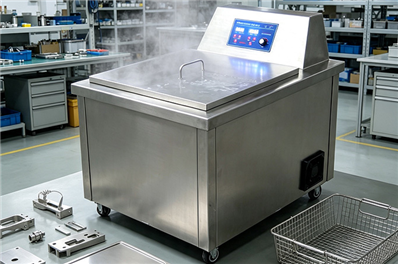 Ultrasonic Cleaning Machine: How Powerful Is It Really? A Shocking Test in Hardware Electroplating Pretreatment
If you have ever walked through a hardware electroplating line, you have seen the frustration firsthand. Parts come out of the bath with patches of peeling plating. Edges look dull. Blind holes show signs of uneven coverage. The plating bath chemistry is